
It Only Takes One Person
Author: Sheri Denkensohn-Trott
As we have realized with our work with people of all ages, and in concert with our vision to inspire others to live happier lives, we firmly believe that if we help one person there will be a ripple effect on others. We may never know the impact, but we certainly are realistic and know that we can’t change the world.
But that doesn’t mean that we can’t dream about doing big things. And making change for those that are our future. Recently, in fact in the last couple weeks, we have been spending a lot of our time talking to young children and undergraduate and graduate students. They are all future leaders. They are all curious and have questions. And they all have struggles and challenges and obstacles in their lives. And for many, regardless of age or circumstances, they are lacking confidence, feeling self-doubt, and wondering how they will get from point A to point B.
 We have learned from these students; especially younger ones. We have been approached by many young children in various places such as grocery stores, clothing stores, even just going down the street. They come up to us and ask a great question and the next thing that happens is that an adult who is with them, yanks them away, apologizes, and we can hear the discussion of the adult telling the child not to ask such questions. We found this to be incredibly upsetting so we wrote an article to send a message to the adults. We submitted this article to magazines, newspapers, and other venues where adults could read them. But absolutely NO takers.
And then the lightbulb went on. We realized that we were targeting the wrong audience. The answer is to talk to the children. And we have been lucky to be invited to do so in numerous local elementary schools. We have spoken to grades kindergarten through five and all of them give us their undivided attention. They ask wonderful questions that don’t need to be filtered. And we have heard questions that have made every adult in the room freeze up. But there is no reason to worry. Questions like, “how do you go to the bathroom” or “can you have a baby” have answers. And it doesn’t mean that we go into such detail that it is inappropriate or embarrassing. But curious children with great questions deserve answers. They are smart. They want to know the answer and if they don’t get one they will likely come up with a story in their mind that is often not realistic and probably scary.
Quote from parent attending elementary school program. “I was told that it was one of the best assemblies ever and the teachers wanted to know if we could do it every year.”
The older students, undergraduates and graduates, have different questions. As we introduce ourselves, they see that we have succeeded in life by making it through college and graduate school, obtained jobs that we found fulfilling, started our own business, and live a happy life. We admit that life is not easy and you run up against barriers, but that is okay. When we talk to 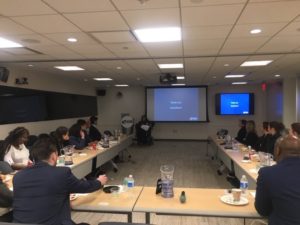 these students we listen closely and help them figure out how to make a plan but not be so stuck to it that if there is a fork in the road they can alter their plan and life isn’t over. That reflecting on what you accomplish is important and there is no need to focus on everything at once. That taking time to “be” and enjoy life is important. And finally, learning how to create self-discipline that is needed to improve deficiencies, navigate the challenges of college, graduate school, and life in general, and move forward in a way that fits with the plan but isn’t so regimented that an obstacle will result in a feeling of failure.
At a recent keynote, a graduate student, President of the Student Senate at the University of Albany said that it was a “killer keynote.”
I am having many one-on-one meetings with students to help them figure out ways to achieve a life goal or a job that incorporates their love of different activities that they never thought could be a part of work. Helping them think things through and build relationships with others to support them in their journey. I also speak to many graduate students that are superstars. They have accomplished so much in their short time in undergraduate and graduate school. And even outside school in jobs/internships that they have held. One student was a barista and another student was a school janitor. I emphasize that they learned life lessons in those jobs that can be applied to anything that they do. Getting all caught up in names and titles can detract from the actual experiences that they have and how they can apply what 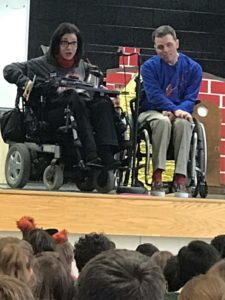 they have learned to what a potential employer is looking for. I don’t ignore the reality that going to the top schools may help you get a great job, but that isn’t, by itself, the recipe for a happy life. Be comfortable where you are and do what you love. Life is short and even though you need to live in the moment, you can still plan for a wonderful future.
We love this work and we hope to expand to all levels of elementary, middle and high school; undergraduate and graduate school; and ultimately employers. We have a lot of learning to do too, but we are getting positive feedback and that is what keeps us motivated. One person at a time.
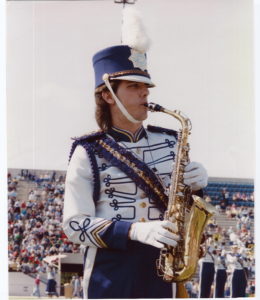 time was in a marching band?” Yes, he was.
 When I’m upset about having lost certain abilities, I try to focus on somebody else who needs something I still can do; like cooking or help with a computer, for example. Sometimes the thing the other person needs is just sitting around with them watching TV! There are likely ALWAYS things that you can do for someone else. And that “someone else” doesn’t have to be a spouse or significant other. I’m not ashamed to admit that there still are times when I am alone and upset about something I’m having trouble doing, that I feel like I want to give up. But my life experience has shown me that using the negative energy that it takes to be upset is better for me and for others once I refocus it on something positive.
 no “one way.” Despite the lack of a perfect formula, sharing some of my recent experiences will hopefully provide some examples of how you can effectively serve as a supporter.
 that I had to be upbeat, comforting, strong, and a good listener. It was helpful to talk about what Tony was feeling and at the same time keep moving forward while we were waiting. I made plans for us to go out and do fun things and at the same time still rest and acknowledge that we were together in the dilemma that he was going through. There were many times when it was important to deal with the information at hand, such as after the biopsy, surgery and diagnosis. At the same time, to be respectful of his wishes regarding the information that he wanted shared, and with whom. I realized that it was important for him to feel that he could tell me when he was scared, nervous and upset. It was painful to hear, but I was the listener and in trying to provide comfort, I realized that if I was in his position, I would want validation that my feelings were not out of the ordinary. We made it through together and admittedly, it was one of the hardest times of my life. I joked that I finally got a glimpse of what it was like to be on the other side. But it is not a laughing matter and we continue to live our lives, focus on being healthy, and continue to experience joy. I know there will be bumps coming such as an upcoming blood test and CT scan, but hopefully that will become part of the journey and I will be there to serve as a supporter and companion at appointments.
 away. Additionally, my friend was going through her own physical recovery from surgery at the time. I did my best at being a realist. What do I mean by this? I kept expressing to her that this was not fair and “love and prayers” were not going to make her feel completely better. I spoke honestly and directly and checked in every day, telling her that she didn’t have to answer but that I was thinking about her. I consistently asked her “what are you feeling?” when we spoke or communicated via social media and I think this helped. Luckily, the weather did not interfere, and we drove from Virginia to New York and attended the memorial service for her mother. It was not possible for everyone who lived far away to make the trip, but I felt it was important for us to be there if I was able. I am so glad that we went. My friend spoke beautifully at the service and I know that our being there gave her a feeling of love and support.
 answer is perfectly okay. And anyone hearing that answer should not feel like they are being pushed aside. It is giving permission to the individual and the family to say “no, we are not ready” without consequences.