My Version of Disability Pride
Author: Sheri Denkensohn-Trott
July was Disability Pride month. As I reflect on my disability and the upcoming 38th anniversary of my accident where I sustained a spinal cord injury, my mind is filled with questions and some answers. What does Disability Pride mean to me?
Fundamentally, I define myself as me. That may sound trite, but I think about myself in ways that likely everybody does. What are my values? What do I like to do with my free time? What do I like to eat? What do I like to read? And the list goes on. That is who am.
I’m also a wife of almost 16 years. So, there are many issues that go along with that. What do I do to make sure my marriage remains strong? What do my husband and I like to do together? Even basic questions like what should we have for dinner? We have long conversations, do activities together that we enjoy, reflect on fun experiences, and plan new adventures and life goals.
 Together, we run our own business. I am a writer, speaker, mentor, consultant, and many other roles within that rubric. I am an attorney. I worked for 25 years for the Federal Government, and although I am no longer working there, I still consider myself a lawyer.
Lastly, I am a woman. I care about my clothing, my makeup when I wear it, my unique health needs, and of course, my hair!
So where does disability come in? Many in the disability community would have wanted me to write about that first. But that is not what I think about first every day. Yes, I need someone else to help me get dressed and get up in my chair. 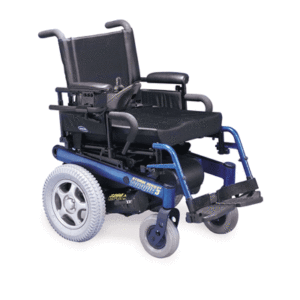 I am reminded all day that I don’t run my life like an “able-bodied” person (as an aside, I do not like using labels). And sometimes it is darn hard being limited. But I try to figure out what I need and adjust when necessary. Some days are just plain difficult and tiring. That is when I need to give in and go to bed so I can binge on a mindless TV show. Sound familiar?
Disability Pride to me is having pride in myself. As a person. It means that I will advocate for the rights of those with disabilities because that is fundamental fairness. It means that I don’t want to be treated like a second-class citizen because I am sitting down. And I deserve to achieve whatever anybody else can and not have obstacles placed in my path because of my disability.
After 38 years, I am proud. I am proud of my educational achievements, my career achievements, my meaningful relationships with my spouse and others, my relationship with my family, and my efforts to give back to others, some disabled and some nondisabled.
That is my version of Disability Pride. And for me, that is enough.
 Mental health should not be a stigma. And because I am viewed as always “happy” I feel it is incumbent upon me to share what feels personal.
 wonderful psychologist and psychiatrist. I am getting regular psychological treatment each week. And I was put on medication. It worked at first and then I had a huge crash. Most people would’ve had to go to the emergency room and be secluded. But good friends never left my side for two days. My husband felt powerless, but his presence reminded me that there was a reason to fight. It was hard to see but it was visible.
 right with a friend or family member, take action. When people start to notice that a happy person is not acting in the usual way, it is a sign that something is wrong. Be aware of the behavior of those that are close to you. You may be the person that steps in at just the right time and is integral in helping them move forward. Or just sitting and holding their hand to make them feel safe.
 So maybe my most recent rejection of change relates to that. But it still surprised me.
 At one point in our selection process, just hearing the word “bed” sent my head into spin mode.