
To Shake or Not to Shake
Author: Sheri Denkensohn-Trott
Shaking hands when you meet someone in a personal or professional setting, especially in the United States, has become an etiquette norm. Much has been written about the nature of “the shake.” A firm shake means that you are confident. A weak shake means that you are tentative. The list can go on, with a myriad of interpretations of the meaning of a handshake.
As a C4 quadriplegic, I wear a splint on my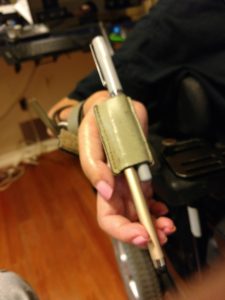 right hand. It holds my wrist and lower arm in place and there is a cuff holding my stylus and pen inserted into the splint. This splint is always on my arm during my waking hours. I cannot move my fingers or my wrist, so unlike others, my hand is not empty when I shake hands.
I am a very upfront person, but I must admit that I had not conquered “shaking hands” until recently. It is embarrassing to admit that to myself. But I hadn’t found the way to deal with my disability when shaking hands. It took a very good friend of mine who is also a user of a wheelchair (but has use of her hands) to intervene at a recent meeting to show me the way.
I was at a business meeting with a colleague and that good friend. As usual, we entered the room for the meeting and went around to shake the hand of those present. The first person came to me and the usual happened. I said hello and put out my right hand. They said hello and put out their hand to shake. No contact took place. There was the usual awkward moment, we both put our hands down, and the gentleman moved on to the next person for a “normal” handshake.
 After a couple of rotations with the same series of awkward non-handshakes, my friend intervened. One of the individuals put out her hand for a shake and I lifted my hand. Before we both stopped because of the awkwardness, my friend said, “Don’t worry, you can shake her hand, it won’t hurt her.” Miraculously there was a handshake. I can’t say it was great, but at least actual physical contact occurred. For a minute I was almost dumbfounded. I am good at speaking up for myself, but I thought to myself, “Why did it take you so long to say the words needed to facilitate a handshake?”
After the meeting I spoke to my friend about the handshake episode. I asked her what she thought about it and admitted that I had been reluctant to address the issue for over 30 years. She told me that in her view, individuals were afraid they would hurt me when shaking my hand. By telling them it wouldn’t hurt, I would give permission to the other person to move forward with the shake.
 I plan to follow her advice and see how it goes. I’m not convinced that I will have the best and most comfortable handshake, but at least the awkward moment will dissipate. Regardless, it was such a relief to realize that I can be in a professional setting and not be the only one in the room starting off with an awkward meeting of another individual.
It just goes to show you that when you think you have conquered all, there is still much to learn. Despite having been disabled for almost 36 years, it took me an extraordinarily long time to figure out the key to the handshake.
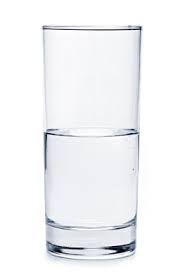 stronger.” If that were literally true, I think I’d be able to bench press a Sherman tank. Sometimes I feel like everything is going wrong for me and my life is the worst it could be. Then another saying comes to mind, “Things are never so bad that they can’t get worse!”
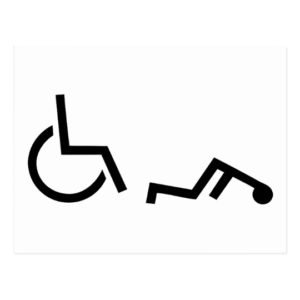 For example, there are times when I fall out of my wheelchair and am on the floor. Of course, the first thing I need to do is assess whether or not I am injured and require medical help, but then, assuming I don’t need medical help, I stop cursing and getting mad at myself for falling, then struggle to get back in my wheelchair, and think of people that I know, or have heard of, who are unable to do the activity that caused my fall. In cases where I fall trying to reach a box of food on an upper shelf because I need the ingredient to cook dinner, I think of my wife who is a quadriplegic and cannot even reach the shelf or cook, and I realize I’m pretty lucky and have little reason to be so mad/frustrated.
 And most importantly, when something bad happens, I get through the incident and then reflect on the fact that I can still do things that I never imagined I would do in my lifetime and that are on my bucket list. Believe it or not, I am leaving in a couple of weeks to go to Comic Con in San Diego with my nephew to celebrate my 50th and his 30th birthday respectively. I never imagined that I would attend this event. I know there will be challenges and frustrations along the way, but throughout the experience I will try my best to focus on the fact that I am doing something on my bucket list.