
Author: Tony Trott
In my local paper, the Washington Post, there was an article recently (7-24) about diversity and the difficulty of achieving and maintaining it. The article mentioned racial, gender, and sexual orientation when promoting diversity. While I have no issues with the importance of those three aspects of diversity, I was kind of at a loss as to why disability was not one of them.
According to the Center for Disease Control and Prevention (CDC), in April 2022 26% of the American population (about 1 out of every 4 citizens) had a disability. Going by that number alone, disability needs to be included in any discussion of diversity. So why is disability so often left out? I think that it has something to do with the fact that even discussing disability makes some people uncomfortable. So, it’s easier to just leave it out of the conversation entirely.
What kind of effect, though, would that have on people, especially younger people, with disabilities? When you were young didn’t you realize when people who were similar to you were on the news or in the newspaper and doing things that would affect you? I think we all did, to some degree.
Now the article I read this morning was about the diversity of those lawyers arguing 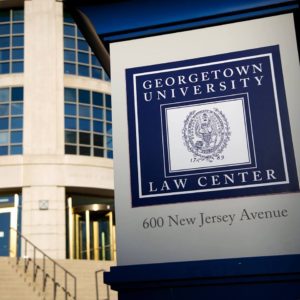 cases before the U.S. Supreme Court. There are, likely, some people who are thinking, “Give me a break. There are no lawyers with disabilities!” To those people, I would say, “Meet my wife who got her law degree from Georgetown Law Center AFTER she became a quadriplegic at age 16!” And it’s not like she is the only lawyer with a disability in the country. They may be few and far between, but they do exist. My wife has a shirt that says, “If you’re doing diversity without disability…you’re doing it wrong.” Very, very true.
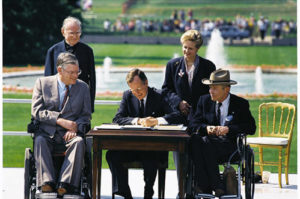 like restaurants, movie theaters, and the like. I’m grateful that laws such as the ADA establish and protect my rights. But, on the flipside, while the ADA has become part of our lexicon, adherence is far from established. Don’t get me wrong, there has been great progress, but in my opinion, we should be much further along than we are.
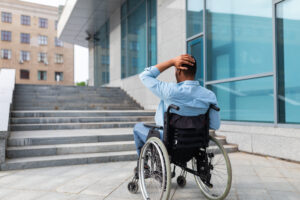 counters, door width, automatic door openers that are placed out of reach, unnecessary steps, and parking spaces that are improperly marked or do not have the requisite layout for a van with a ramp to open. Add to that, hotels with “accessible” rooms that are not accessible, and other amenities that do not meet ADA standards.
 the concept of accessibility and the needs of those who have disabilities are receiving more attention. This is especially true in the arts, where individuals with disabilities are being cast for roles of someone who has a disability instead of an able-bodied person being cast in that role. These gains cannot be taken for granted. There is progress.
 it is an adjustment from my last formal class at Georgetown Law Center in 1993.
 Lounge.” Right now, I am focusing by getting my assignments done by the deadline on February 1, so I worry that if I go into the lounge or start reading comments, I will go down what I call the “social media hole,” when I start reading and don’t realize that over an hour has gone by and I still have work to do!