
Author: Tony Trott
Being grateful in life is one way to feel happier. Science proves that gratitude increases happiness. But I have a progressive disability, so what can I possibly be grateful about? The easy answer would be to just be grateful that things aren’t worse. In my opinion that’s one of the most annoying catch-alls around; unfortunately, there’s some truth to it.
For example, as probably most of you know, I was a music major in college and even though my disability impacted my ability to play my saxophone, I stuck it out and graduated with a music education degree. During college I also participated in marching band (the well-known Marching Royal Dukes) and was in the jazz band. It is 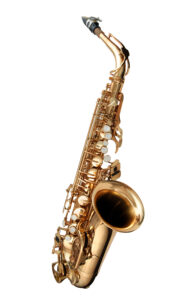 not overstating it to say that music was my life. I graduated from James Madison University in 1992 and as my disability progressed, playing the sax got more and more difficult. Mentally, that became and still is difficult to reckon with. I did some student teaching, but it became apparent that my disability and I were not going to be successful in the music arena. Believe me, it was a harsh reality. But I went back to graduate school and got my master’s degree in special education. I worked at two nonprofits serving individuals with disabilities and their parents. I certainly can’t say I didn’t enjoy my work, but I would have liked to have been teaching music and playing it even if it was just at night! I don’t think I’ve played a note or even taken my saxophone out of its case in almost 20 years! (On a side note, anyone want to buy a Selmer Balanced Action?)
So, as I said before what can I possibly be grateful about? I had to dig deep otherwise I would dwell on what was stolen from me. And that’s not a great place to be. What I am grateful for has not much to do with the ability to play music. However, I am grateful for some of the lessons learned as a musician. I learned that as difficult as something seems to be at first glance, if you slow it down and practice you will be good at sit eventually. I also learned not to judge  your own progress by that of others. Lastly, and maybe most importantly, I learned that different does not mean wrong!
To sum it up, I try to focus on the lessons I’ve learned and how they apply to different aspects of my life. I’d be lying to say that I don’t grieve for my loss of music and now my growing lack of ability to hear it. I have memories of music that I will always treasure, but certainly they bring feelings of loss. Hopefully, if something similar applies to you, I hope you can find something to be grateful for. Because I know if I didn’t find some gratefulness, that saxophone would be staring me in the eye every single day and causing problems.
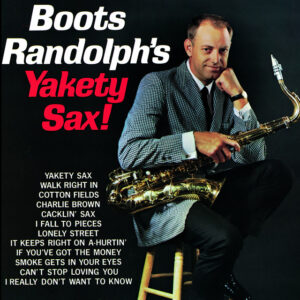
 auditory neuropathy. I am not even going to try to explain that but suffice it to say that it is significantly different from the type of hearing loss associated with aging and conventional hearing aids don’t solve the issue. My hearing loss is a lack of clarity and distinction of sounds and not one of loudness. Basically, what I hear when someone is speaking to me is nothing but a jumble of sounds and with a regular hearing aid, that just becomes a louder jumble! I did get a cochlear implant which helps some, but my hearing is still far from perfect.
 with unhappiness and depression. My situation is what it is, and although loss of music is hard, I can still find other things to enjoy and not dwell on my lack of ability to hear music.