
Author: Tony Trott
I think it’s pretty common knowledge that everybody has their own needs; this really becomes evident when you are charged with designing something to meet unique specifications. The case in hand right now is 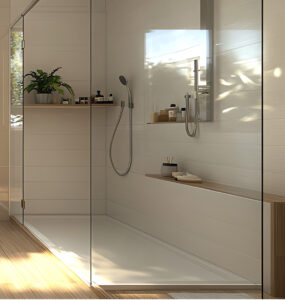 that of accessibility of a shower. Please note that the picture to the right is not our shower, it is an AI generated picture from the Adobe website!
In some ways this probably sounds like a no-brainer. I mean to make a shower accessible you just add grab bars, right? Not so. First is the understanding that it is a roll in shower. Second, my wife and I both use a shower chair, so we do not use any kind of fold down bench. Next are grab bars. That begs the questions where do you put them, what size are 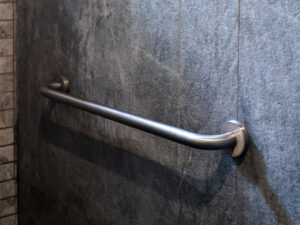 the bars, should they be vertical, horizontal, or diagonal, and there are more questions involved such as height. I have seen websites that purport to be experts on placement of grab bars and say things like, “Never place a grab bar diagonally.” The best advice about grab bar placement and accessible shower design in general is to make sure to get user perspective.
In the case of our new shower, it will be shared by more than one person, so we are going over to see it while construction is underway so we can point out where we want grab bars placed and answer other questions about them.
My wife and I are well versed in our respective needs, so I’m sure that we will be able to agree on placement of grab bars so that we can both use this shower safely and efficiently.
 institutions to be accessible to individuals with disabilities in their programs and activities. The ADA broadened coverage to include employment, public accommodations, and later websites and other technology through addition of Section 508 to the Rehabilitation Act.
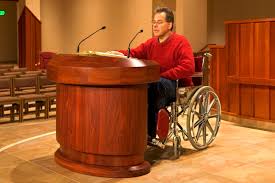 altar, bathroom, entryway, and programs that are accessible for those that are blind and deaf. These are major achievements that should be applauded. There are individuals all around this country that donate their time and resources to places of worship and many religious institutions have used donated resources to support making religious buildings more accessible for everyone, including individuals with disabilities.
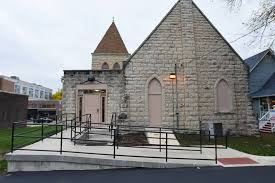 individuals that are knowledgeable about the needs of people with disabilities and can help critique construction plans, review procedures, and help leadership of religious institutions figure out what they can do within their budget and how much more they can do if they have a fundraising campaign for specific accommodations. This is often people who have disabilities.
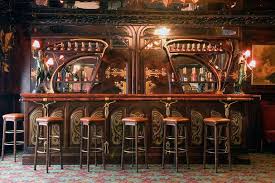 a wheelchair user, it is not so simple. In fact, rolling up to the bar usually means that only the top of my head is visible to the bartender. I have to back up and yell for the bartender or ask a person sitting on a high stool to get the attention of someone behind the bar so I can order.
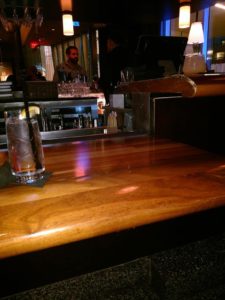 We entered the restaurant and told the hostess that we had a reservation but wanted to be near the bar for an hour. She asked us to follow her and we took us on a route all the way around to the other side of the bar. I thought to myself, “Why is she making this so difficult by having this go all around the bar?” When we arrived at the other side of the bar, the bartender, the hostess, and another individual asked three people to move and took their chairs away. I began apologizing for making it inconvenient for the folks that were being moved. They were very nice about it, but I still didn’t understand the purpose. Then, out of nowhere, two of the guys moved some glassware and voilà, they lowered the bar to wheelchair height. Total mouth drop.
 the bar. And it makes business sense. In addition to telling our friends, we plan to go back soon and sit comfortably at the bar. I intend to find out more about the initiative taken and research involved with designing and installing this bar. Eddie V’s hit the mark and should be recognized for being inclusive and wheelchair friendly. Cheers!